
Viper Royale game modes and tournaments: what the rules say
Jump to section
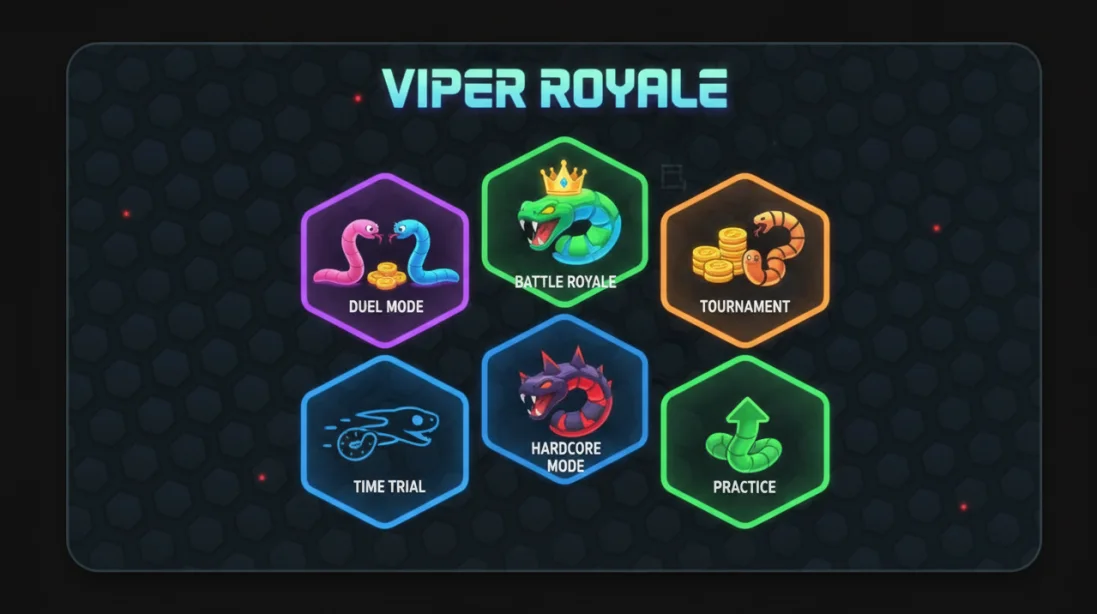
Viper Royale game modes: what the choices usually look like
Skill games at online casinos tend to offer a handful of formats. The names and details differ from one casino to the next, so treat this as a general map, not a description of any single product. Here is how such modes usually differ:
- Solo play. You play on your own against the game itself or against a set target. Your result does not depend on teammates. This is often the simplest format to learn.
- Team play. You join other players and your results are combined. Communication, roles and shared goals may matter. The rules usually explain how a team result is counted and how any reward is split.
- Quick matches. Short rounds that start fast and end fast. They suit a brief session, but a short round is still a real-money round if you play for money. Short does not mean harmless.
- Ranked matches. Your results build a standing over time. The rules normally say what counts toward your rank and when it changes.
- Practice or demo formats. Some casinos let you try a game without real money. If such a format exists, the casino will say so. Check it in the game lobby.
- Special event formats. These run for a limited period under their own conditions, and the conditions can differ from regular play.
Whatever you choose, open the rules of that mode first. Look at the entry conditions, how a result is counted, and what happens if a round is interrupted. The casino’s terms are the final word, not a summary on a third-party page. Questions that come up often are collected in our questions and answers.
Playing responsibly: set your limits first
Playing for real money can lose you money, so treat it as paid entertainment and never as a way to earn. Only adults aged 18 and over may play. These points will help you stay in control:
- Check your age and local rules. You must be 18 or older. Make sure that playing is allowed where you live and that the casino accepts players from your location.
- Set a budget before you start. Decide on a stake you can afford to lose. Keep it separate from money meant for bills, rent or savings.
- Use the casino’s limit tools. Many casinos offer deposit limits, loss limits and session reminders. Look for them in your account settings and switch them on early.
- Take time-outs. Step away when you feel tired, annoyed or rushed. A break costs nothing.
- Never chase losses. Playing more to win back what you lost usually makes things worse. Stop instead.
- Watch the clock. Competitive formats can pull you in for longer than planned. Set a time limit and keep to it.
- Do not play under pressure. A leaderboard or a countdown can create urgency. No ranking is worth money you cannot spare.
- Know the warning signs. Hiding your play, borrowing to play or feeling anxious when you stop are signals to pause and talk to someone.
If gambling stops being fun, help is available:
- Gambling Therapy offers free online support worldwide.
- Gamblers Anonymous holds meetings in person, online or by phone, with no fees.
- Gam-Anon supports family and friends of people who gamble.
Many casinos also offer self-exclusion. Ask support or look in your account settings.
How tournaments usually work
A tournament is a competition that runs for a set period under its own rules. At online casinos, such events usually follow a familiar pattern. Details differ, so the casino’s tournament page is always the source to trust. The same goes for any Viper Royale tournaments that a casino may run.
First comes joining. Some events are open to everyone who plays the game. Others ask you to opt in, or to meet a condition such as a minimum number of rounds. The terms say which applies. Read this part carefully, because missing an opt-in step can mean your play does not count.
Next are the rounds. A tournament may be a single long window where all your play adds up, or a series of stages where only some players move on. The rules explain how a round is scored, what happens in a tie, and how a disconnection is handled. If the game uses a particular scoring method, the casino should describe it.
Then comes the leaderboard, which tracks standings while the event runs. We cover it in the next section.
Finally, prizes. The casino sets them, not the game’s players and not this website. The prize list, the way prizes are paid and any wagering or withdrawal conditions attached to them all belong in the tournament terms. Check whether a prize comes as cash, bonus funds or something else, and what conditions follow it. Also check the start and end of the event as the casino states them.
A tournament adds excitement, but it does not change the nature of the game. Real-money play can still lose money, whatever the event offers. If a tournament encourages you to play more than you planned, step back. For how the underlying outcomes are decided, see odds and what decides the outcome.
Leaderboards and rankings: what counts and when they reset
A leaderboard is a ranked list of players. It shows who stands where, based on a rule the casino or game defines. Two things matter most: what counts, and when the list starts over.
What counts varies. In games of this kind, a ranking may reward points earned, rounds won, a score reached or consistency across many rounds. Some boards count only certain modes. Others count everything you play during the event. Some ignore rounds that were abandoned or voided. None of this can be assumed. The rules for each board state what is included, so read them before you rely on a position.
Reset timing matters just as much. Boards often reset on a schedule, such as at the end of an event, or they may run continuously. Some seasonal rankings clear at a set point and begin again. The casino should publish the reset rule. If it is unclear, ask support before you play on the strength of a rank.
It also helps to know how ties are broken, when final standings are confirmed and whether results can be reviewed or corrected. Casinos sometimes remove entries that break the rules, so fair play and honest accounts matter.
A word of caution. A high position can feel rewarding, yet it is not income. Never raise your stakes only to climb a list, and do not let a ranking decide how much you play. Treat the board as information about the event, not as a target worth chasing at any cost.
When you compare Viper Royale game modes with each other, remember that ranked formats and casual formats can use quite different counting rules. Always check which one you are in.

How players are matched, and why it matters
Matchmaking is the process that decides who plays with or against whom. In competitive games it is a big part of fairness. Skill games at online casinos commonly use one or more of the following ideas.
Matching by skill pairs players of similar ability. The aim is to avoid situations where a beginner meets a very experienced player again and again. A system like this usually relies on past results to estimate level. How closely it follows your results, and how fast it adapts, is something the casino or game rules should explain.
Matching by stake groups players who choose a similar level of entry. This keeps rounds balanced in terms of what each person puts in. Again, the available levels are set by the casino and shown in the lobby.
Matching by region puts players in the same area or time zone together. The usual reason is smoother connection quality and fewer delays during a round. Some casinos limit which locations can join which pools.
Why does all this matter? Fair matching helps keep results meaningful. If pairings were random and lopsided, outcomes would say little about the players. Good matching also reduces the chance of one side having a built-in advantage that has nothing to do with play.
Still, matching is not a promise of results. Even a well-balanced match can be lost, and real money can be lost with it. Look in the rules and the casino’s terms for how matching works, what data it uses, and what you can do if you think a match was handled unfairly. Support can usually point you to the complaint process.
Questions and answers
Where can I find the real rules for a mode or tournament?
Are all game modes played for real money?
Do tournaments make winning more likely?
How often do leaderboards reset?
Who may play Viper Royale game modes?